Paperback published by cassava Republic Press 29th June 2021
the first time you heard a Tizita that was yours, you fell in love with it. You never forget your first love; you never forget your first Tizita.”
In the heart of Nairobi, four musicians – The Diva, The Taliban Man, The Corporal and 70-year-old bartender Miriam – gather for a once in a lifetime competition, to see who can perform the best Tizita. In the audience is tabloid journalist John Thandi Manfredi, who is enthralled by their renditions of the Ethiopian blues.
Desperate to learn more, he follows the musicians back to Ethiopia, hoping to uncover the secret to this haunting music. Manfredi’s search takes him from the idyllic Ethiopian countryside to vibrant juke joints and raucous parties in Addis Ababa, set to a soundtrack of stirring Tizita performances.
From the humble domesticity behind the Diva’s glamorous façade, to the troubling question of the Corporal’s military service past, Manfredi discovers that the many layers to this musical genre are reflected in the lives and secrets of its performers.
A love letter to beauty, music and the imagination, Unbury Our Dead with Song captures how it feels have an encounter with the sublime.
Extract from Unbury Our Dead With Song
ChapterSeven
Have you everhad to killlove?
I startedwith The Diva. She was sitting on a bench in the dressing room, among the left overboxing gear. Her perfumewafting in theroomfelt alien layeredover the enduringsmell of men and sweat. Shehadchangedintobluejeans, a white T-shirtanddirtybrownsneakers. All aroundherwereshinyplastic bags full of clothes and otherthings she had bought in Nakumatt and Westgate Malls to takeback to Ethiopia. Shelookedtaller than she had on stage.
I guessthis is notexactlyBroadway. Have you everbeen? I asked, halfapologisingfor the ABC andhalftotalkover the awkwardness I wasfeeling.
‘Why would I have been to Broadway?’ Her voiceoutside the microphone and the singingwas deep, with a thin rasp as it’s edges; not the deepness of a womanlike Big Mama Thornton, but a masculine–femininevoice– like a manand a womanreading a poemtogether. It justsoundedrightcomingfrom her. Her voice was hers.
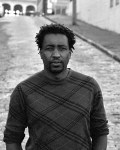
ABOUT AUTHOR MUKOMA WA NGUGI
Mukoma Wa Ngugi is an Associate Professor of English at Cornell University and the author of The Rise of the African Novel: Politics of Language, Identity and Ownership, the novels Mrs, Shaw, Black Star Nairobi, Nairobi Heat, and two books of poetry, Logotherapy and Hurting Words at Consciousness. Mukoma was born in Evanston Illinois and grew up in Kenya before returning to the United States for his undergraduate and graduate education. He is the son of world-renowned African writer Ngugi Wa Thiong’o.
Mukoma holds PhD in English from the University of Wisconsin, Madison, an MA in Creative Writing from Boston University and a BA in English and Political Science from Albright College. He is the co-founder of the Mabati Cornell Kiswahili Prize for the African Literature and co- director of the Global South Project Cornell. You can findthe author on


 Bookread2day